
The Husband really wanted to see The Dead Sea Scrolls at the Reagan Library (thrilled to see something older than us 😊). They have a very versatile exhibition space that garners impressive museum-quality presentations from around the world. In years past, we would drive to Simi (it’s about 1 ½ hours north of us) and stay overnight for a relaxing couple of days. But now, our cat Patchwork’s diabetes prohibits overnight jaunts. So, we made a quick day of it, taking the scenic route through downtown LA by mistake – LOL!
Going to a Republican Presidential Library gave me pause but I never heard any mention of The President Who Shall Not Be Named, so that was good. And, I admit, I wore as much blue as I could, including my nail color!
We’d never had to wait in line for any other exhibit, so I guess that attests to the popularity of this one, plus Saturday is their busiest day, according to one of the docents. There were a lot of artifacts from the region but, naturally, the big draw was the scrolls themselves. Here’s a few highlights of the history of The Dead Sea Scrolls. I hope you’re on a device that allows you to enlarge and read some of the informational cards on the smaller displays.
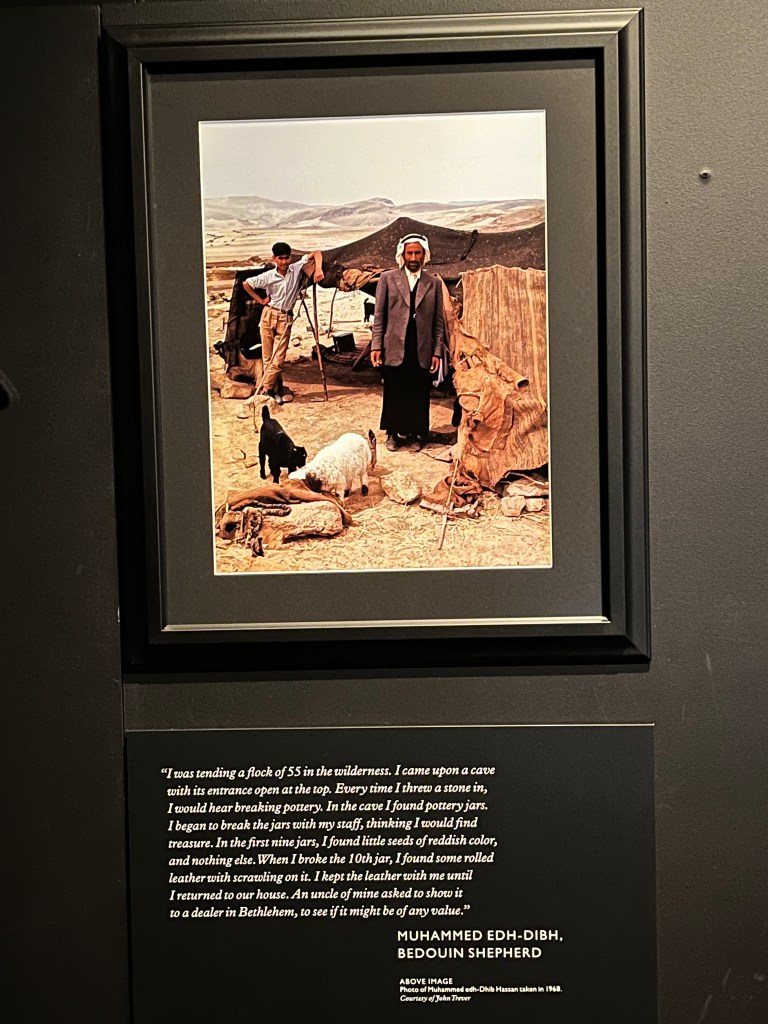
Here’s the Bedouin Shepherd who started it all
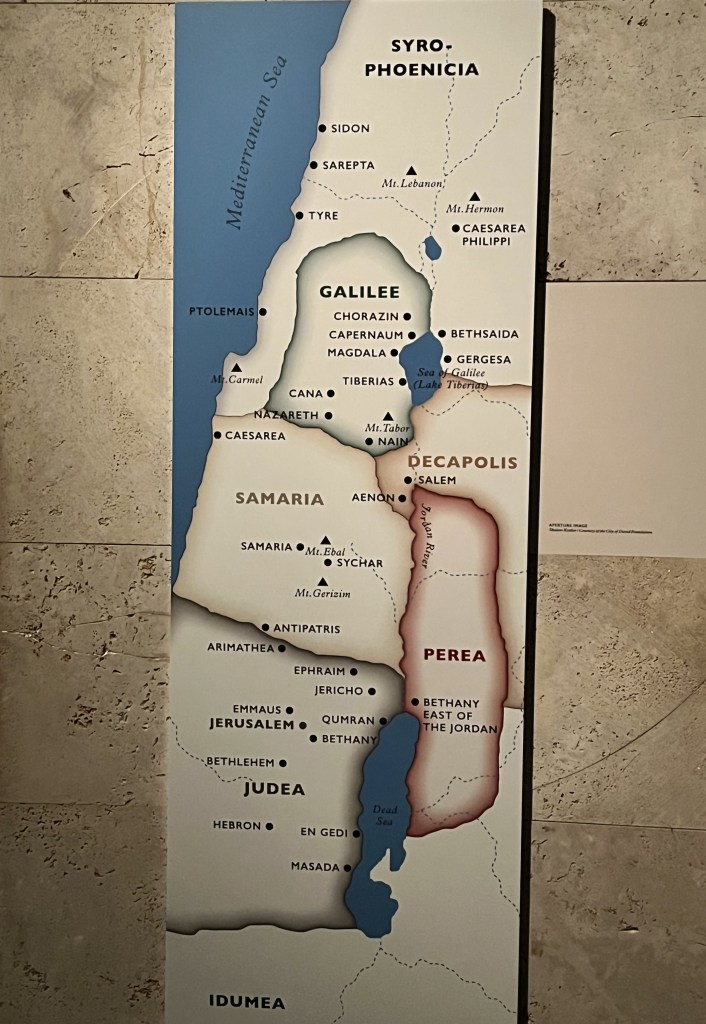
Map of the Ancient Region
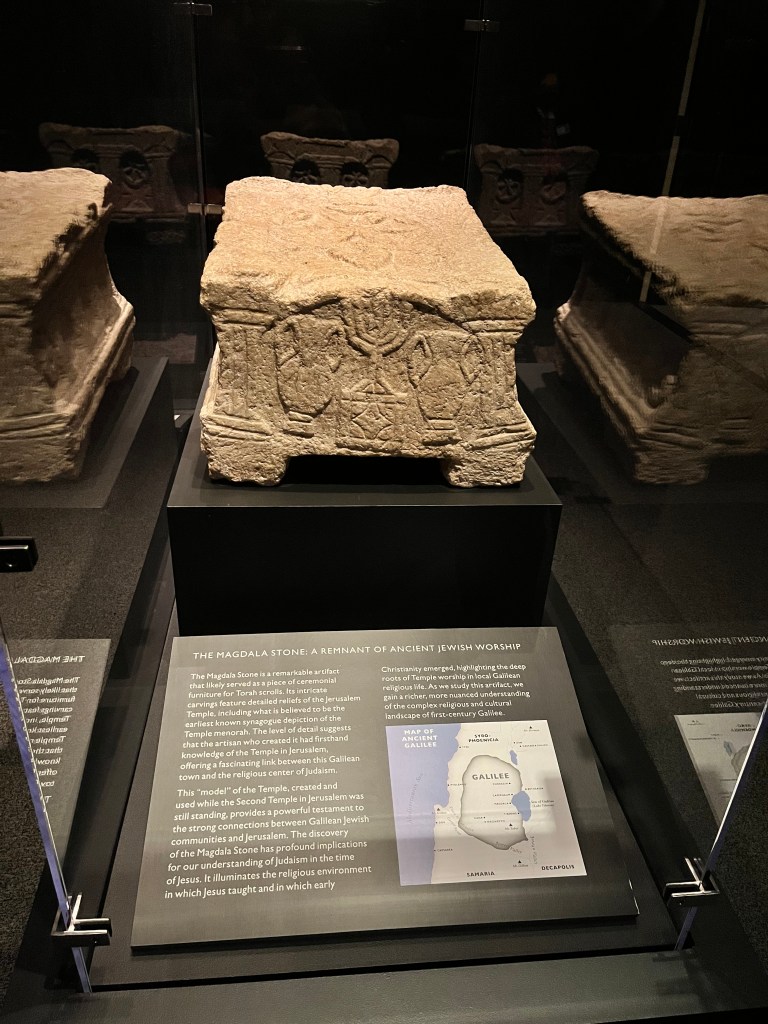
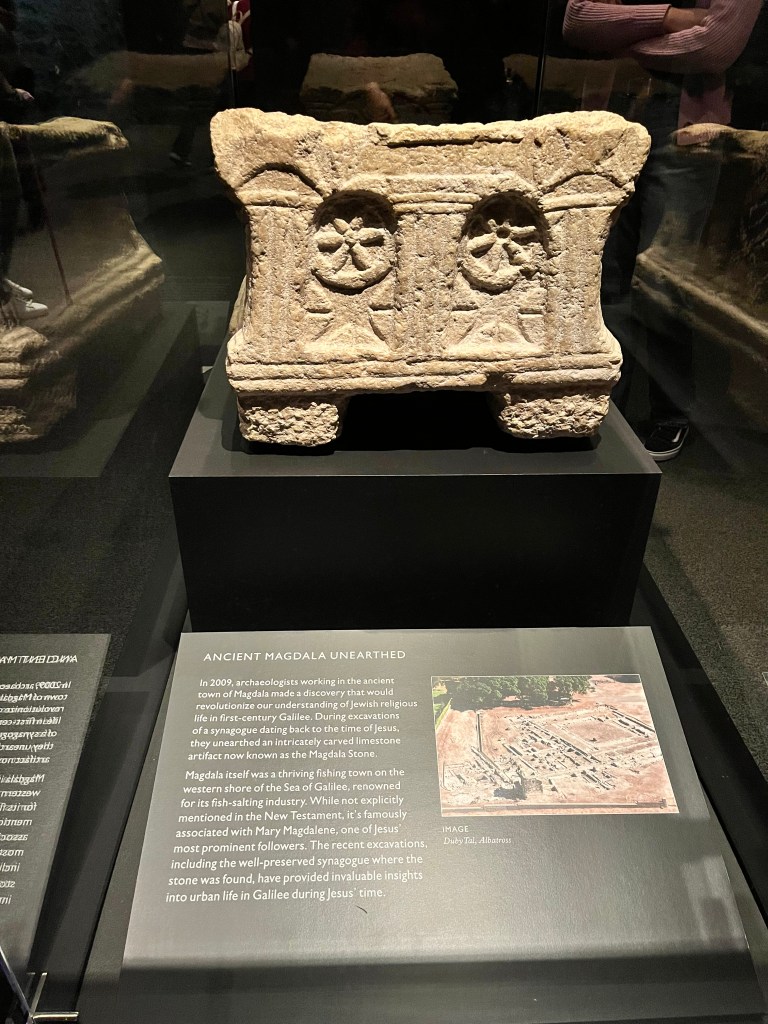
The Magdala Stone, ceremonial furniture for the Torah scrolls
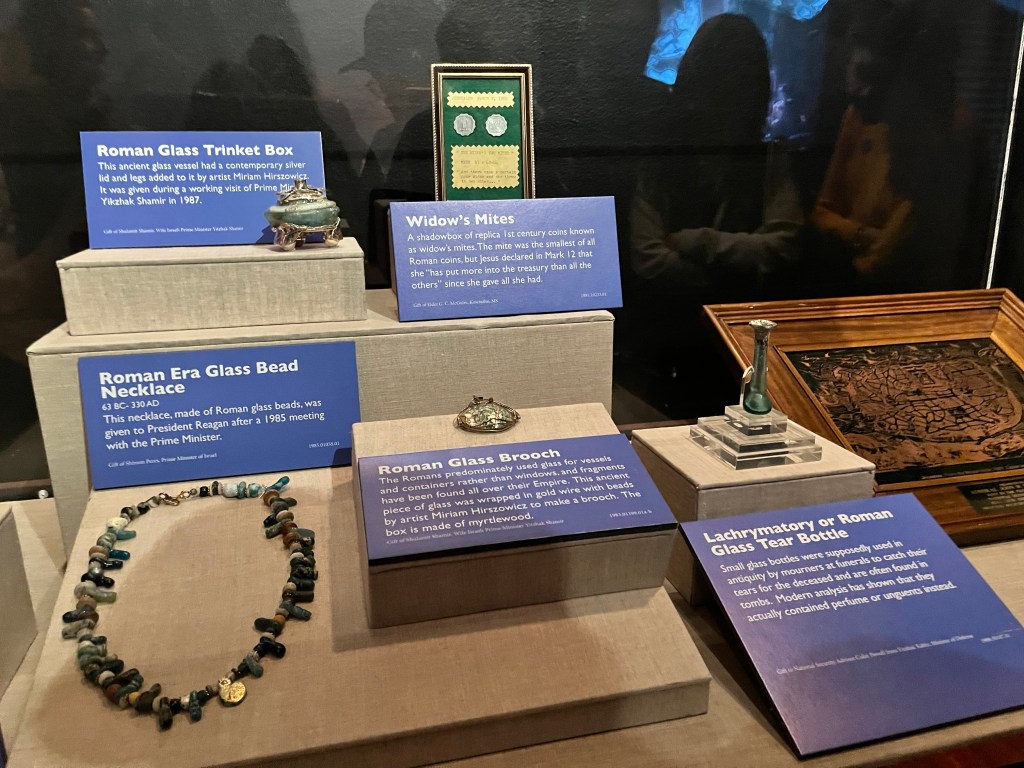
Ancient glass always fascinates me. How something that fragile manages to survive intact for thousands of years is miraculous.

And, of course, as a jewelry creator, I also love to see adornments of the day.
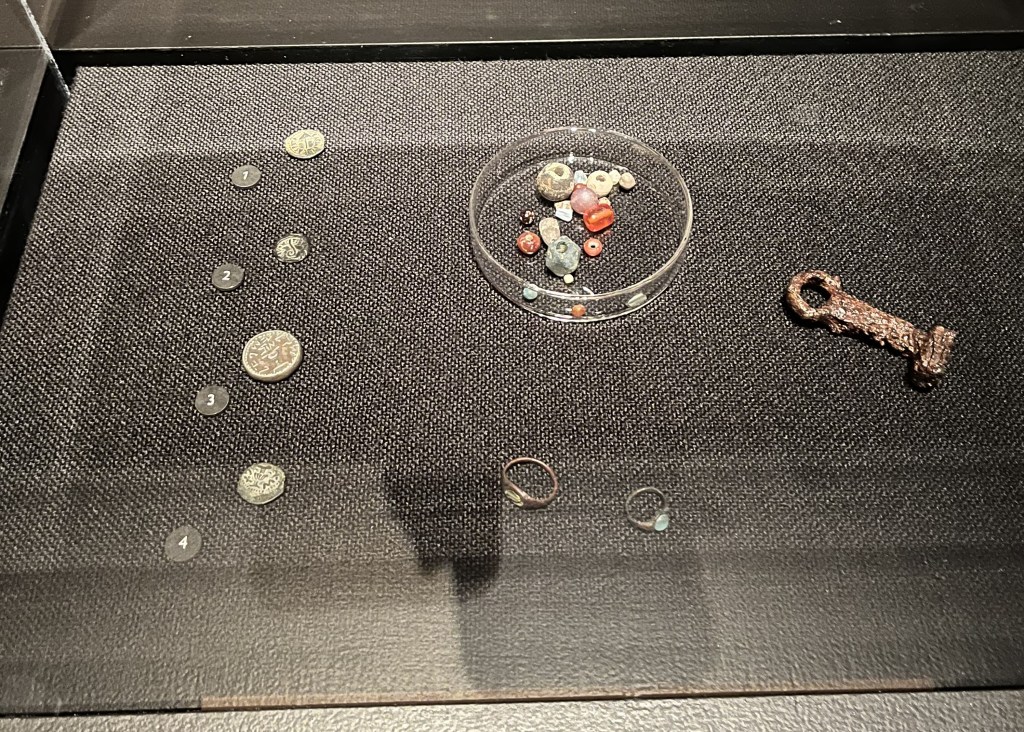
This one made me laugh. The information card said, even in ancient cities, things fell out of people’s pockets! They gleaned that “fact” since all these little trinkets were found individually within the diggings and not as a cache together.
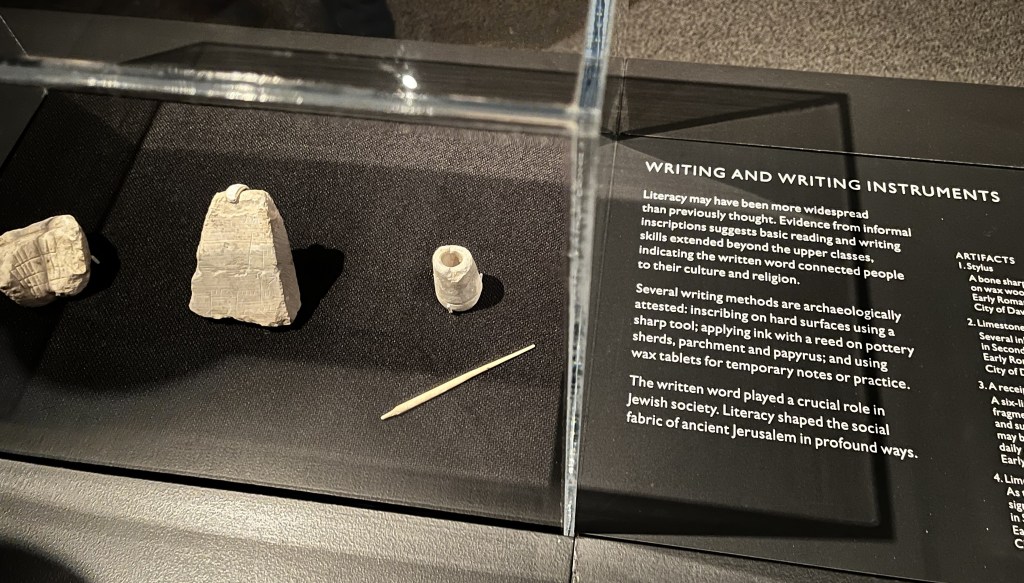
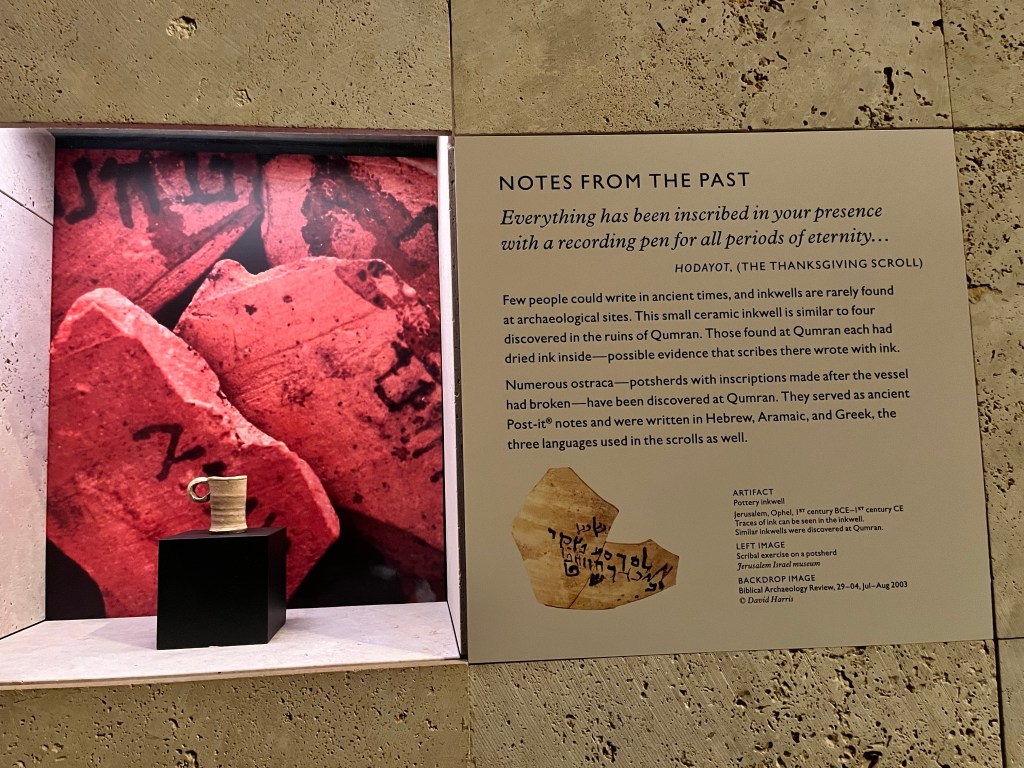
Seeing these writing instruments makes me appreciate my Inkjoy pens!
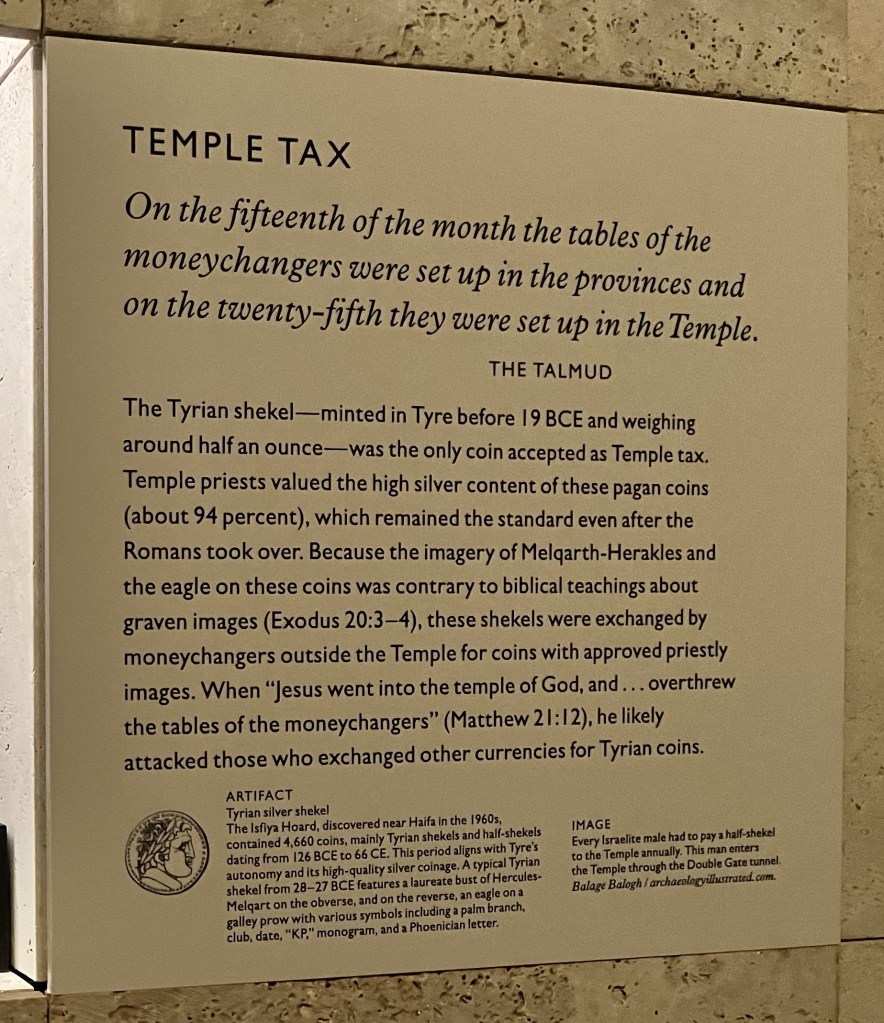
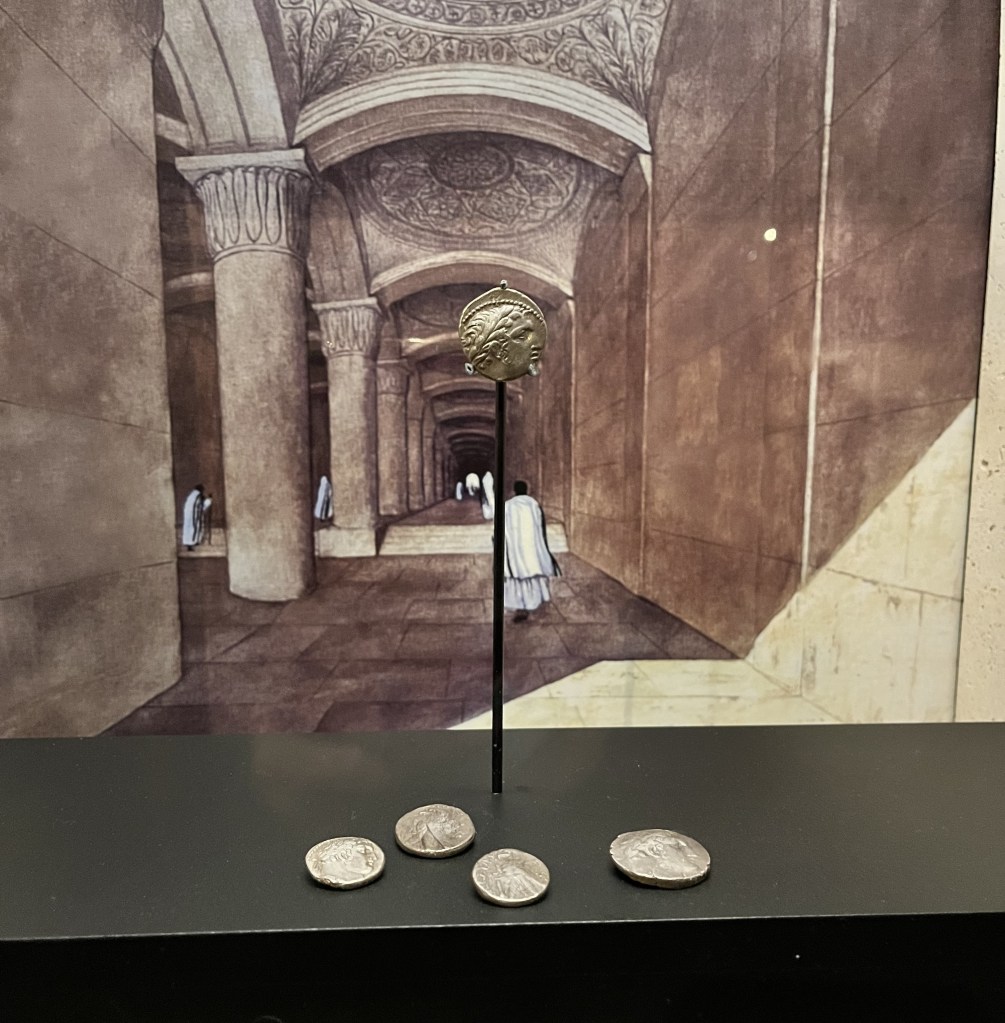
Shekels were the only coins accepted as Temple Tax
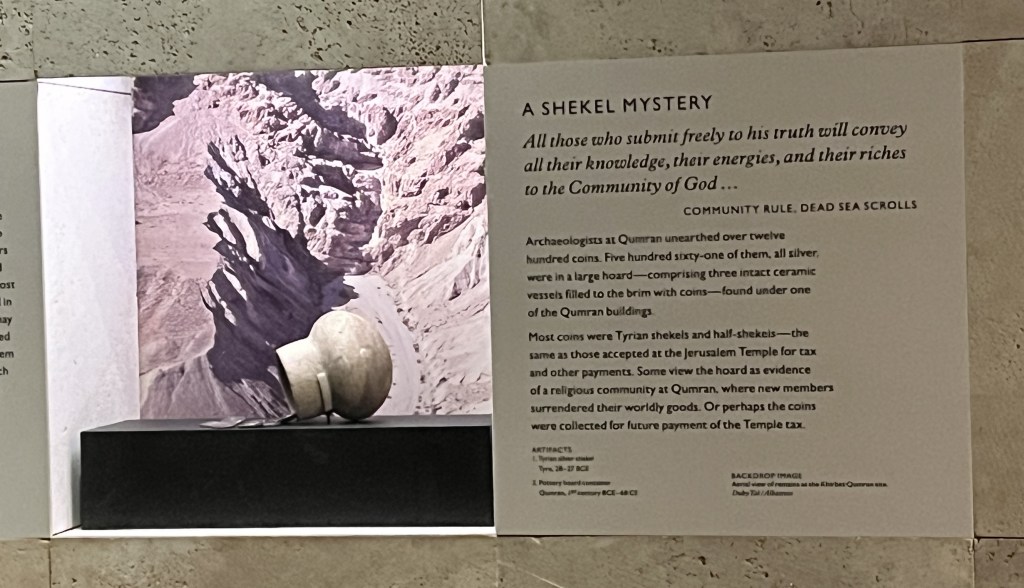
This proves: You can’t take it with you!
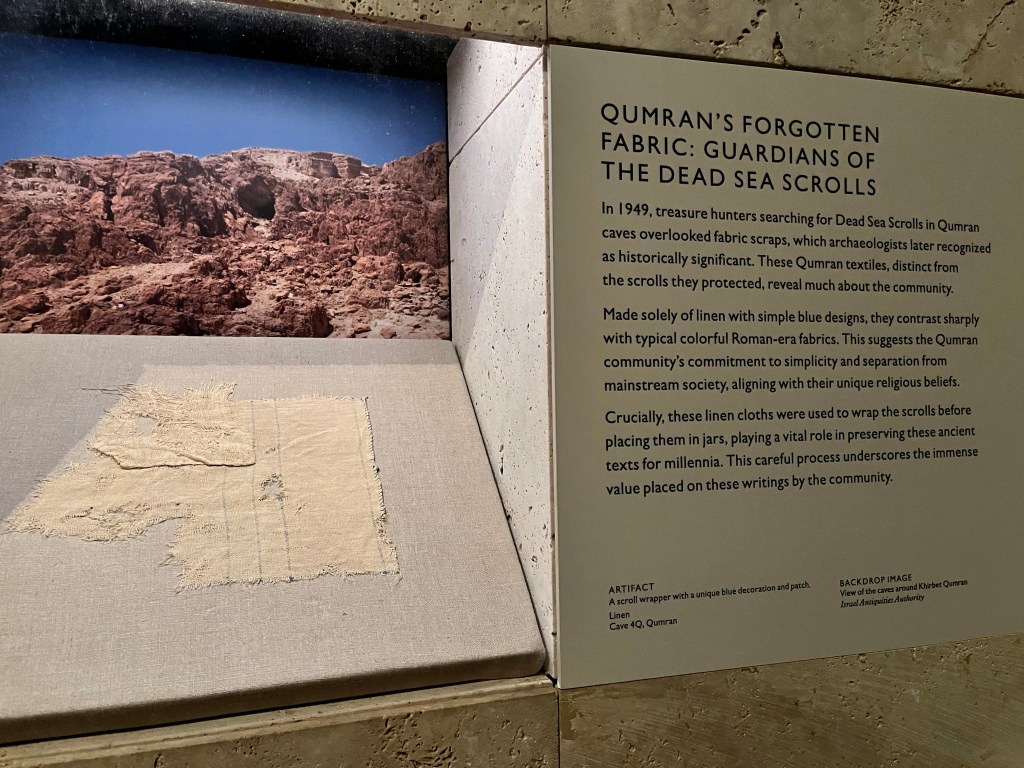
Some of the Scrolls were protected by fabric and the people searching for them missed them because they were looking for paper, not linen.
And here are some examples of the Scroll exhibition itself, on loan from the Israel Antiquities Authority, with information on the contents and a photo, then the actual Scroll pieces under glass that we stood inches away from.
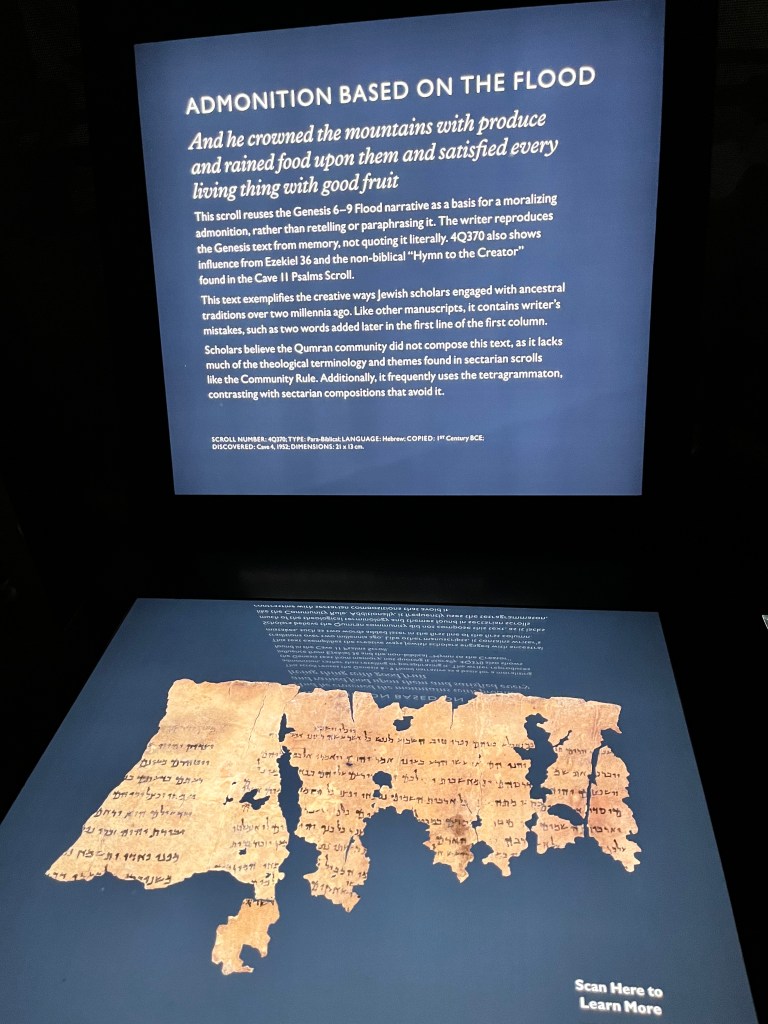

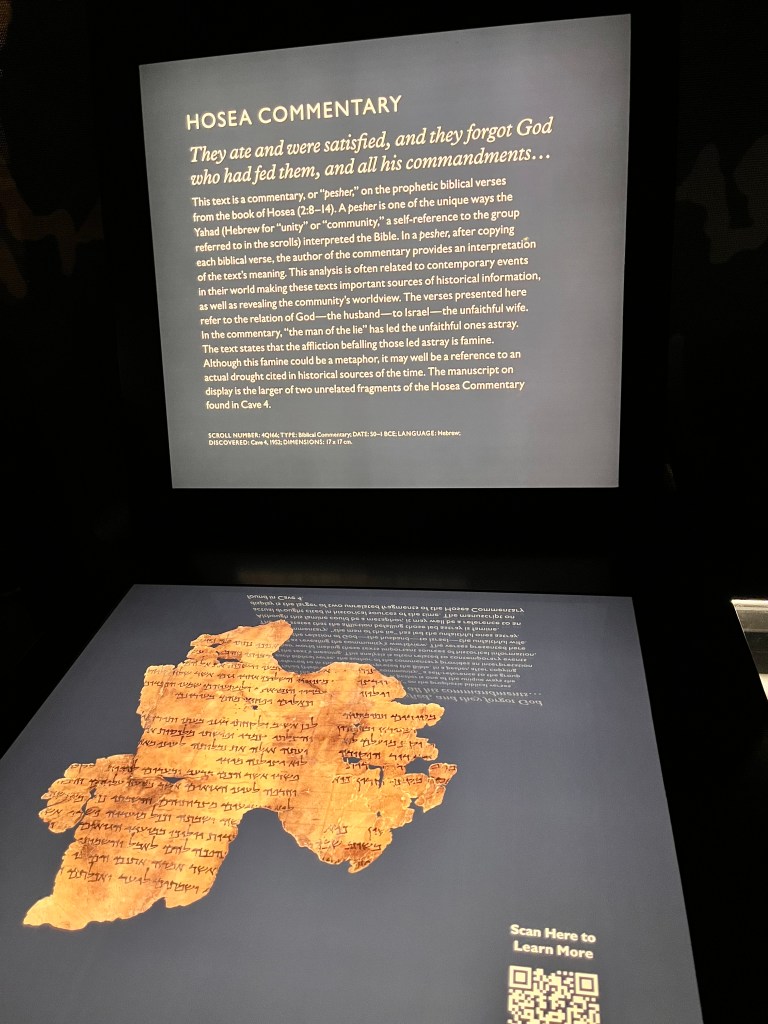

This one was much clearer and brighter than the others. I could actually imagine someone bent over a table, dipping their pen in the ink, and painstakingly writing out these words, speaking to me through the ages. It was so beautiful, I got teary-eyed. This photo doesn’t do it justice.
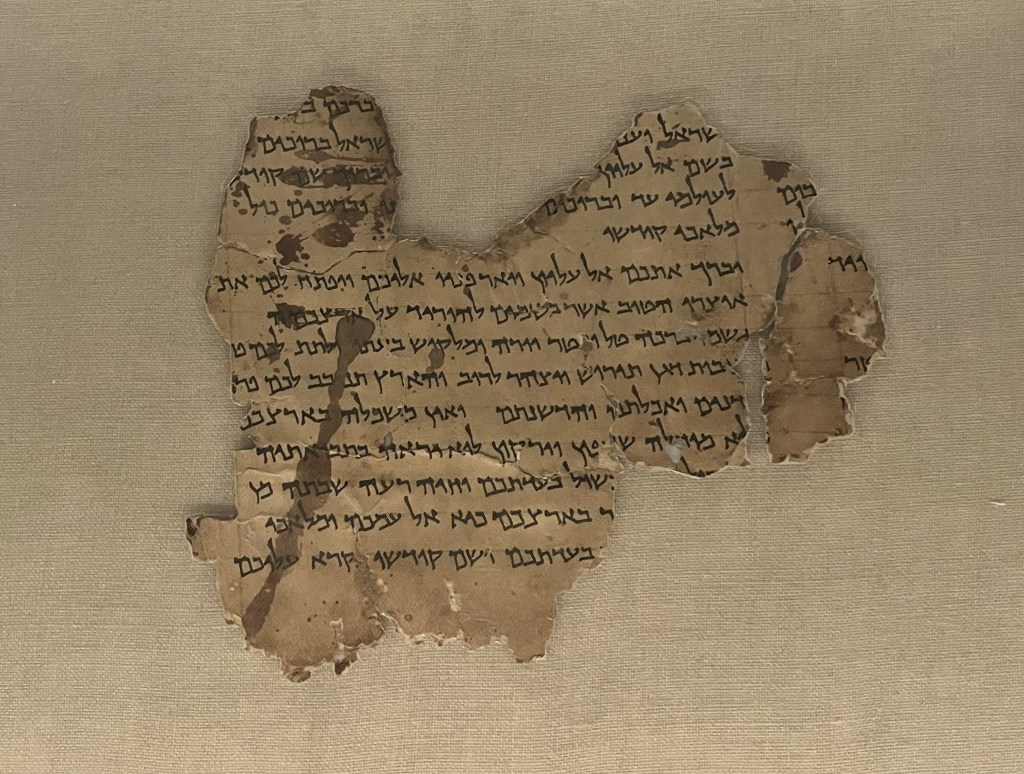
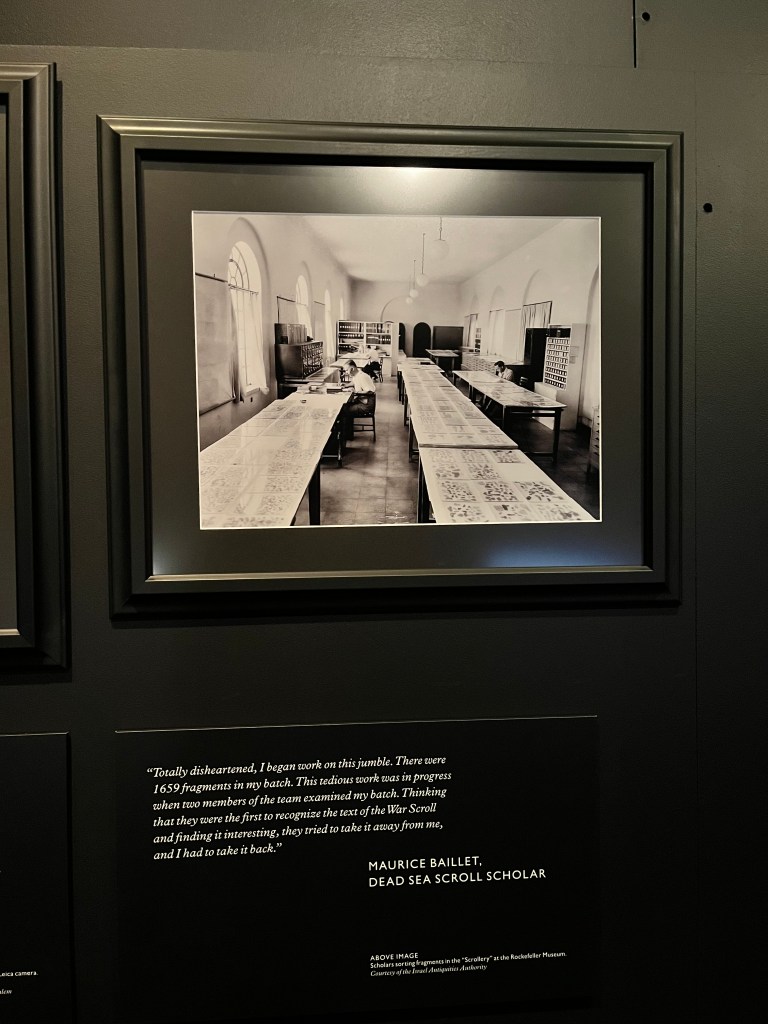
After seeing the real things, we walked through a display showing how the scrolls have been studied since the discovery in 1947.
We were talking to one of the docents who told us to watch for this display. She, and we, were marveling at how, back in the day, the people studying these incredibly precious artifacts did so with cigarettes dangling from their lips or fingertips! And they used Scotch tape to assemble the pieces until they realized that the tape was damaging the material!
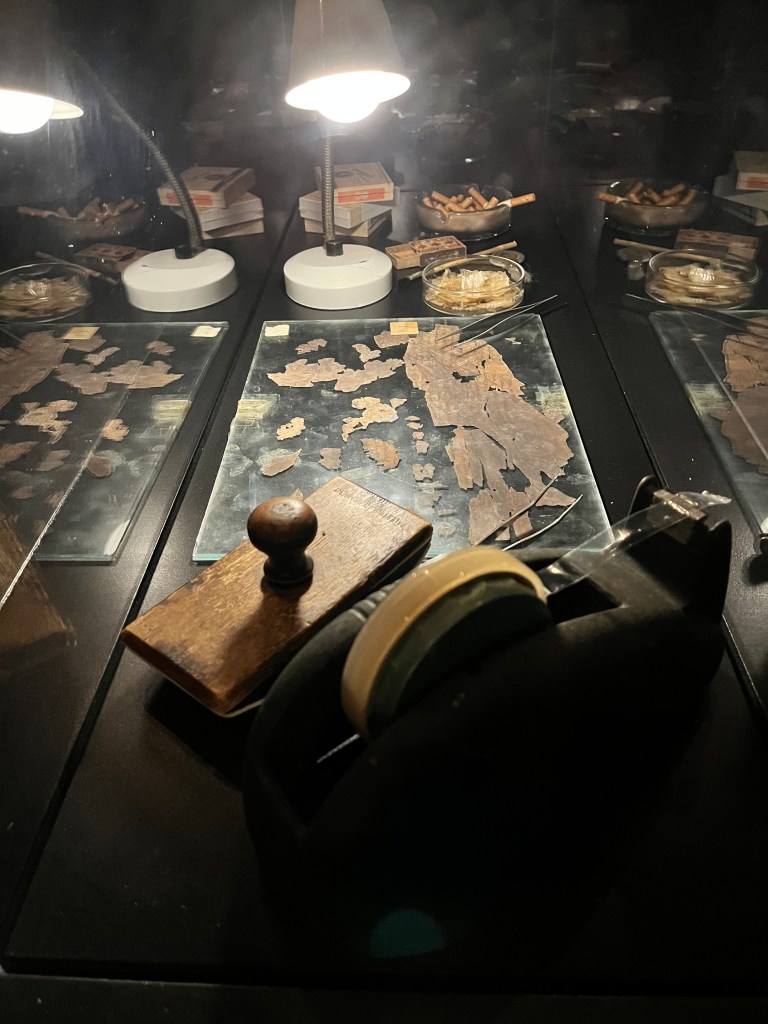
Interesting story, plus you can see how the pieces were laid out.
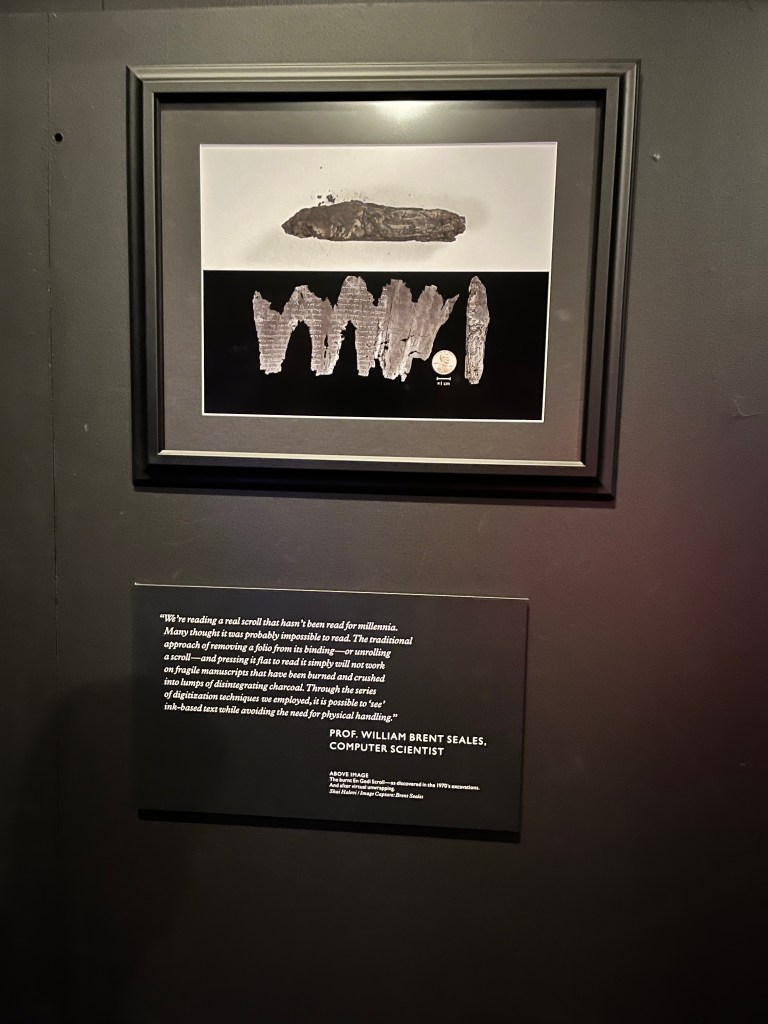
Some of the Scrolls would be damaged too much to be unrolled, so other techniques are being used to read them.
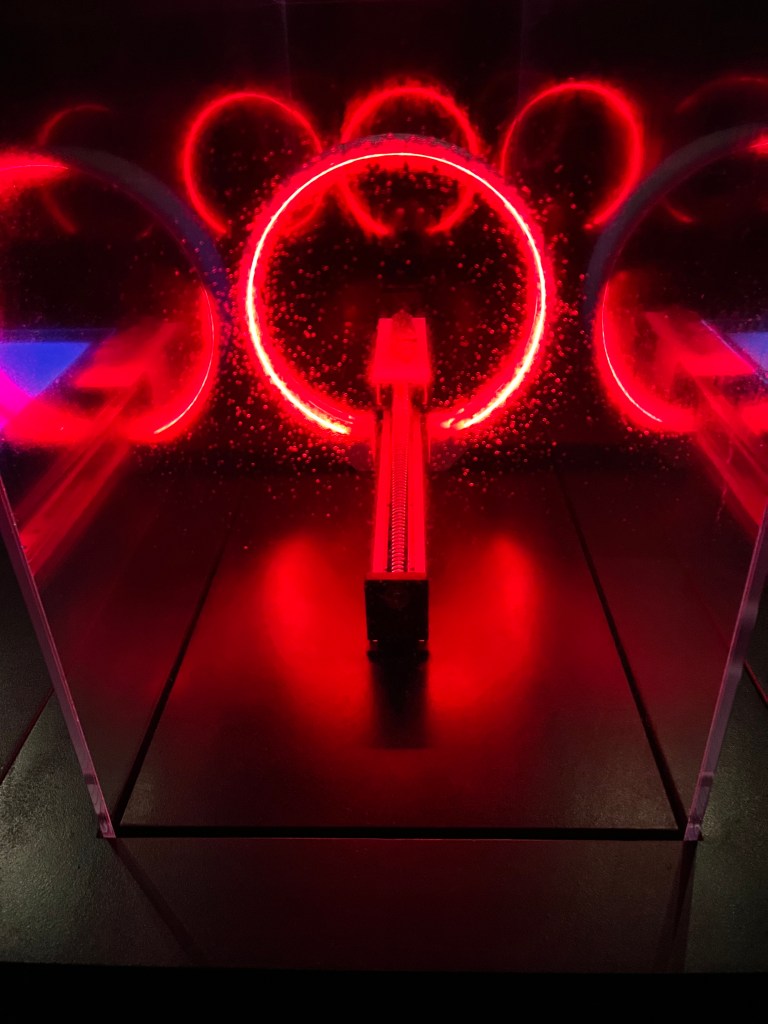
See the small chunk at the end of the paddle, in the center of the biggest circle. This is a simulation of one of the machines being used to “read” the unrollable scrolls.
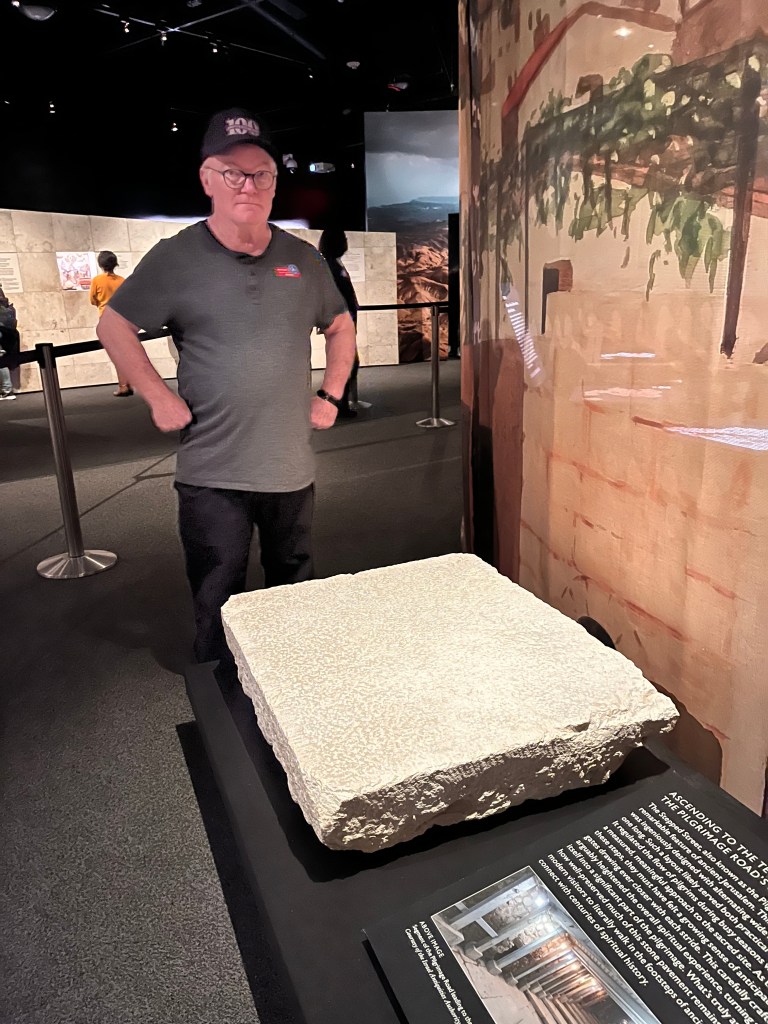
And a couple of pictures of us. The Husband with a piece of stair from a temple.
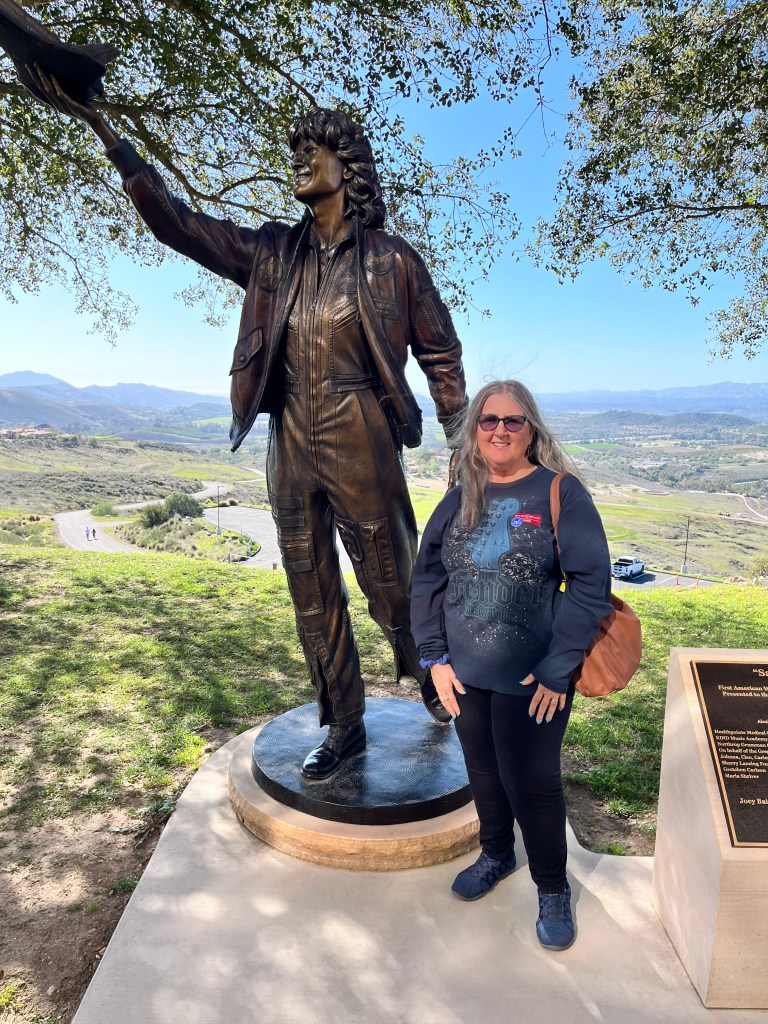
Me, with Sally Ride.
If you’re in the LA area, and this sounds interesting, you may want to book your tickets soon.
Until I put this blog post together, I didn’t actually realize how much information I’d absorbed. And I didn’t even include the ossuary info (families would bury their dead, then later go gather their bones and place them in little, ornate boxes), other everyday pottery and implements, or the scroll with the Ten Commandments. It’s quite a lot of fascinating history.

 I'm Writing As Fast As I Can